Medical device compliance consulting for Biotech, Pharma, Biopharm, MedLab, Biomed, and R&D companies
Failure to meet regulatory standards can be costly
Failing to meet regulatory standards puts the success of your medical device at risk. You face expensive recalls, legal penalties, and delayed launches... impacting your company's trust and bottom line.
You're not sure how to comply.
Your people are too busy to figure out compliance.
You don't trust your documentation and systems to meet compliance standards.
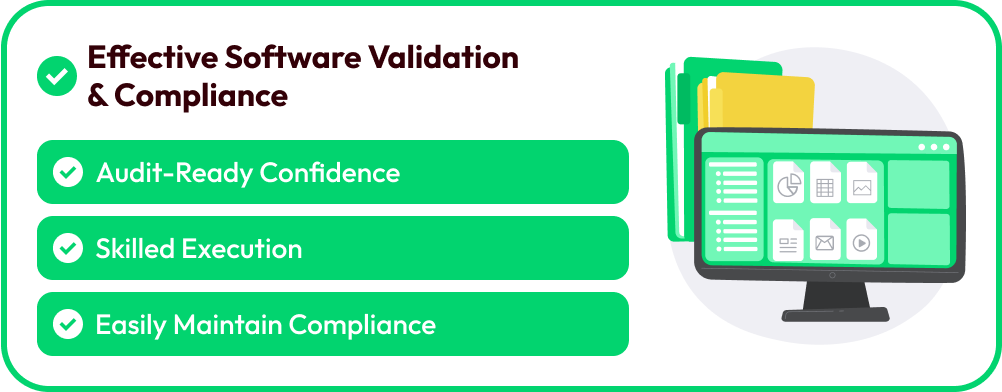
Audit-Ready Software Validation & Compliance
Remediate, Validate, and Comply
Medtech SW Compliance Analyzer
Easily identify the gaps in your Medical Device's compliance: Classified by Risk, Validation, or QMS.
All-in-One QMS Tune-Up
Your Quality Management System (QMS) is the backbone to your regulatory and standards compliance. We enable you to make it Audit-Ready and Easy-to-Use.
Quality & Compliance Process Builder
All the documents, templates, and processes you need to support your compliance efforts. Seamlessly integrated into your QMS.
Grant explains how it all works
Founder & CEO of RedPeakTechGroup
Play Video
Software Validation
For Medical Devices and Automated Manufacturing & Inspection Systems
Validation Voyager
Starter
Most Popular
Compliance Co-Pilot
Standard
Regulatory Navigator
Advanced
Templates Library Access
(Validation, Protocols, Reviews)
SOPs for Software Validation
FDA QSR, ISO 13485, MDSAP Compliance Checklist
Self-paced Online Training
Email & Call Support (2 group calls)
Consultation Calls (Up to 2/wk)
--
Expert Document & Activity Feedback
--
Gap Analysis Support
(FDA QSR, ISO 13485)
--
ISO 14971 Risk Management Support
--
External MDSAP Audit Prep
--
Full Validation Execution (SW Requirements, Protocols, Reviews)
Lorem ipsum dolor sit amet, consectetur adipiscing elit, sed do eiusmod tempor incididunt ut labore et dolore magna aliqua. Ut enim ad minim veniam, quis nostrud exercitation ullamco laboris nisi ut aliquip ex ea commodo consequat. Duis aute irure dolor in reprehenderit in voluptate velit esse cillum dolore eu fugiat nulla pariatur. Excepteur sint occaecat cupidatat non proident, sunt in culpa qui officia deserunt mollit anim id est laborum.
Andrew
Lorem ipsum
Lorem ipsum dolor sit amet
Lorem ipsum dolor sit amet, consectetur adipiscing elit, sed do eiusmod tempor incididunt ut labore et dolore magna aliqua. Ut enim ad minim veniam, quis nostrud exercitation ullamco laboris nisi ut aliquip ex ea commodo consequat. Duis aute irure dolor in reprehenderit in voluptate velit esse cillum dolore eu fugiat nulla pariatur. Excepteur sint occaecat cupidatat non proident, sunt in culpa qui officia deserunt mollit anim id est laborum.
Lisa
Lorem ipsum
Lorem ipsum dolor sit amet
Lorem ipsum dolor sit amet, consectetur adipiscing elit, sed do eiusmod tempor incididunt ut labore et dolore magna aliqua. Ut enim ad minim veniam, quis nostrud exercitation ullamco laboris nisi ut aliquip ex ea commodo consequat. Duis aute irure dolor in reprehenderit in voluptate velit esse cillum dolore eu fugiat nulla pariatur. Excepteur sint occaecat cupidatat non proident, sunt in culpa qui officia deserunt mollit anim id est laborum.
FAQs
What are the key requirements for FDA software validation?
The FDA requires that software used in medical devices be validated to ensure it meets its intended use and performs reliably. This includes establishing software requirements, designing and developing software according to these requirements, and validating the software through rigorous testing. The process should also include documentation of all validation activities and results.
How do I ensure my software validation process meets FDA guidelines?
Follow FDA guidelines such as those outlined in the FDA's General Principles of Software Validation and ISO 13485 standards. Ensure thorough documentation, implement robust testing procedures, and maintain traceability from requirements through validation to support compliance.
What documentation is needed for FDA software validation?
Key documentation includes software requirements specifications, design specifications, verification and validation plans, test protocols and reports, risk management documentation, and change control records. Documentation should demonstrate that the software meets all requirements and performs as intended.
How do I handle software changes and updates in terms of FDA compliance?
Implement a structured change control process that includes evaluating the impact of changes, re-validating the software as needed, and updating documentation accordingly. Ensure that all changes are well-documented and that validation processes are repeated for significant updates.
What are the common pitfalls in software validation for medical devices?
Common pitfalls include inadequate documentation, insufficient testing, lack of traceability, and failure to address software changes properly. Ensuring a thorough and well-documented validation process is crucial to avoiding these issues.
How can I integrate software validation into the overall product development lifecycle?
Integrate software validation early in the development lifecycle and ensure it aligns with other product development activities. Use a risk-based approach to prioritize validation activities and maintain close coordination between software development and validation teams.
What are the FDA’s expectations for risk management in software validation?
The FDA expects a comprehensive risk management process that identifies and mitigates potential risks associated with software. This includes performing risk assessments, implementing risk controls, and ensuring that any residual risks are acceptable in light of the benefits provided by the device.
How do I prepare for an FDA audit of my software validation processes?
Ensure that all documentation is complete, accurate, and up-to-date. Conduct internal audits to identify and address potential issues before the FDA audit. Be prepared to demonstrate how your software validation processes comply with FDA requirements and how you manage software changes and risk.
What are the best practices for validating automated manufacturing systems?
Best practices include conducting a thorough validation plan, performing qualification activities (IQ/OQ/PQ), ensuring proper documentation of all validation activities, and maintaining ongoing monitoring and maintenance. Additionally, assess the impact of any changes to the automated systems and re-validate as necessary.